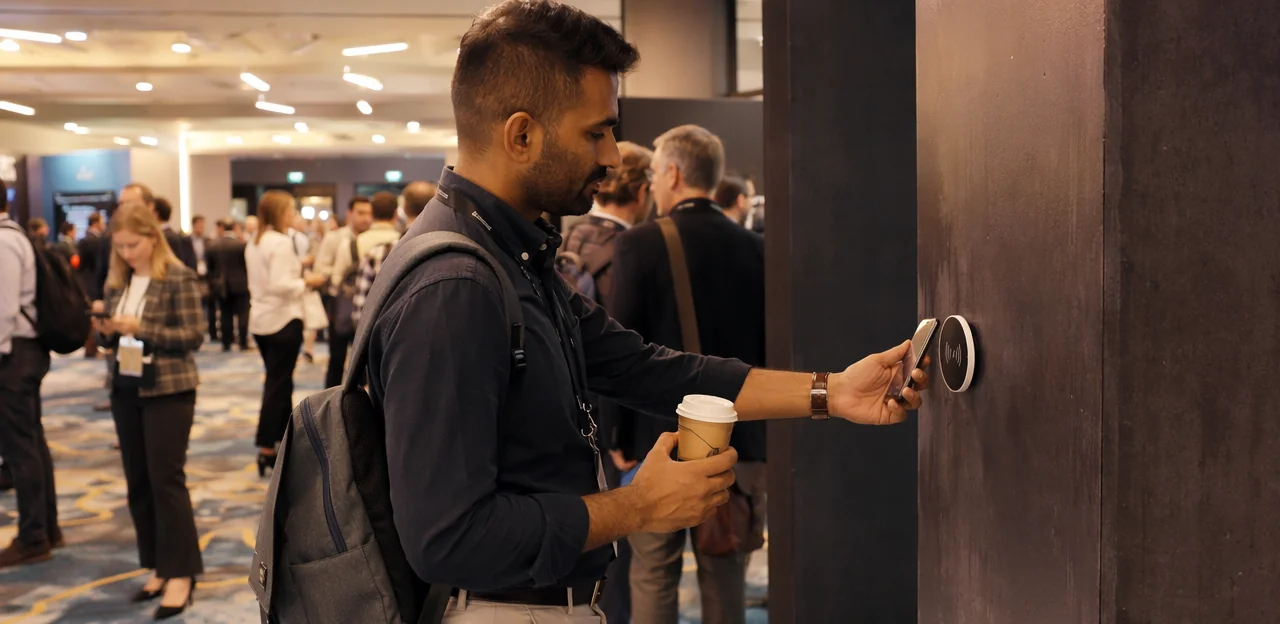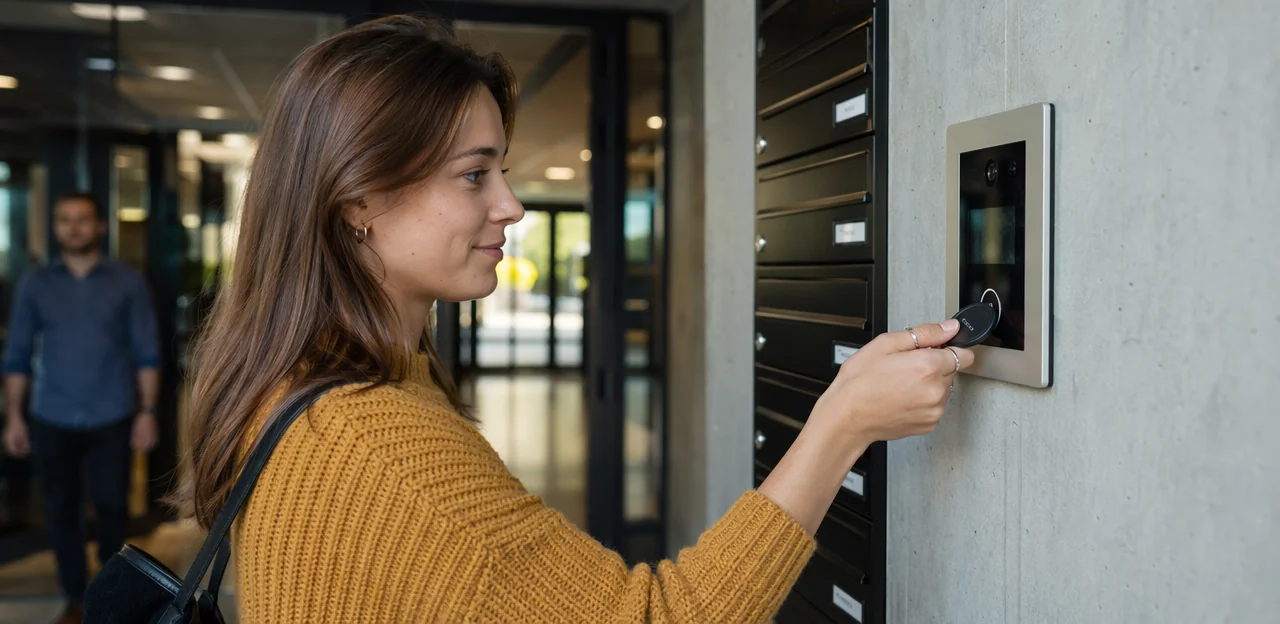
A leaking faucet in the gym shower, a broken light in the hallway, a messy lounge after peak hours—small issues in shared spaces can quickly shape how residents feel about a property. The challenge for housing providers is not just fixing problems, but hearing about them early enough to act. That is where NFC resident feedback is changing the game.
By placing tap-to-report touchpoints in high-traffic communal areas such as lobbies, elevators, laundry rooms, parking garages, and amenity spaces, property teams can make it effortless for residents to flag issues the moment they notice them. No app downloads, no long surveys, and no delay between the experience and the report. The result is faster service recovery, better visibility into recurring problems, and a smoother resident experience overall.
This article explores how NFC-enabled feedback works in housing and property settings, why it is especially effective in shared spaces, and how it supports both guest experience and long-term client satisfaction. We will also look at the operational benefits of real-time issue reporting, the role of NFC and QR touchpoints in modern property management, and how platforms like Tapsy can help teams respond faster and improve resident trust.
Why NFC resident feedback matters in housing and property

The challenge of reporting issues in shared spaces
Traditional shared space issue reporting often breaks down because problems happen away from the office and outside service hours. In housing blocks, residents may notice faults in lifts, hallways, bin stores, laundry rooms, parking areas, or communal entrances, but still delay reporting because the process feels slow or unclear.
- Residents must find the right email, phone number, or portal
- Reports often need photos, location details, and issue categories entered manually
- Communal problems can feel “not urgent enough” to justify the effort
- People may doubt whether housing maintenance reporting will lead to action
These delays matter. A broken entrance light, overflowing bin store, or faulty lift can quickly affect safety, cleanliness, and the overall resident experience. Fast, simple tools like NFC resident feedback help capture issues in the moment, improving trust, satisfaction, and response times.
How tap-to-report improves convenience and response speed
NFC resident feedback makes reporting simple at the exact place a problem happens. Instead of searching for a phone number, emailing management, or logging into a resident portal, residents can tap NFC touchpoints in hallways, lifts, laundry rooms, gyms, or shared entrances and submit an issue in seconds.
- Removes friction: no app download, password reset, or contact lookup
- Speeds up action: residents can tap-to-report issues the moment they notice them
- Improves accuracy: reports are linked to the specific location, reducing vague descriptions
- Supports faster maintenance reporting: teams receive clearer, timelier information and can prioritize urgent problems sooner
For housing operators, this means more issues get reported early, before they escalate into larger service or safety concerns.
The link between feedback, service recovery, and tenant trust
A fast resident feedback system turns complaints into fixable tasks before frustration spreads. With NFC resident feedback, tenants can report issues in shared spaces the moment they notice them, helping teams respond while details are still accurate.
- Quicker triage: Instant reports help staff prioritize urgent problems such as spills, lighting failures, access issues, or cleanliness concerns.
- Better communication: Automated acknowledgements and status updates show tenants that their feedback was received and assigned.
- Stronger service recovery: Faster action, clearer ownership, and visible follow-through improve the quality of service recovery.
When residents see problems logged, tracked, and resolved, tenant trust grows. That sense of responsiveness strengthens perceived accountability and reassures tenants that property teams take shared-space standards seriously.
How NFC resident feedback works in shared environments
What NFC touchpoints are and where they are placed
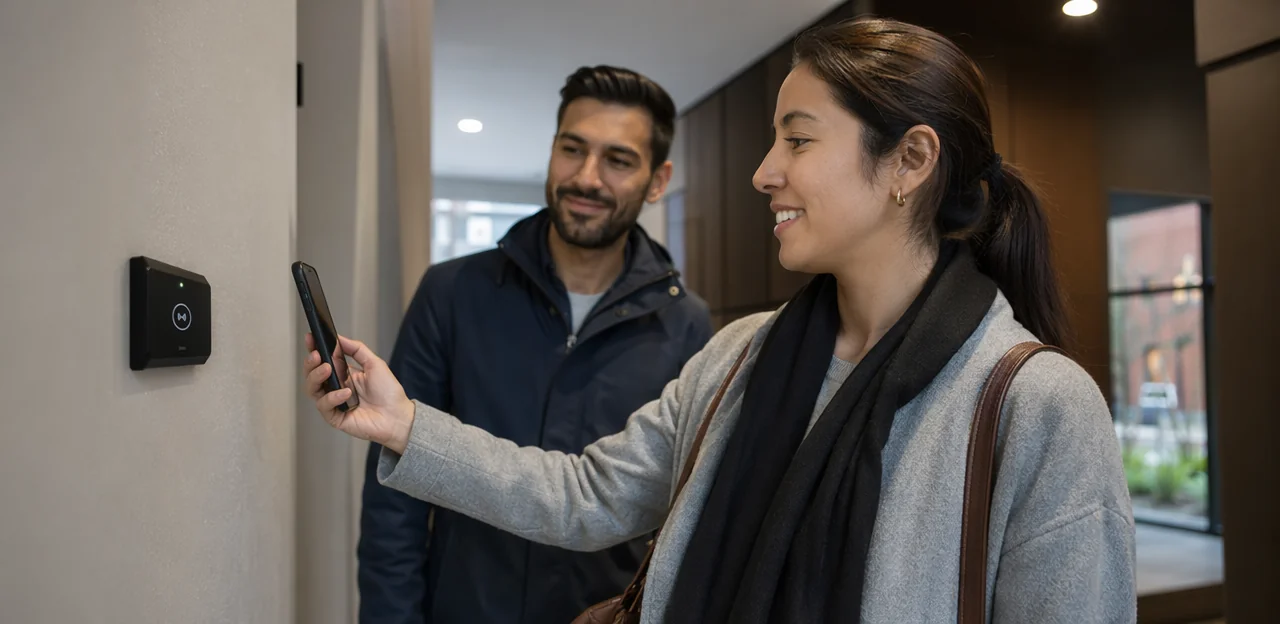
NFC touchpoints are small, tap-enabled NFC tags for housing placed in physical locations so residents can instantly report issues with a phone—no app, login, or paper form required. For effective NFC resident feedback, place tags exactly where problems happen in shared spaces.
- Entrances and lobbies: capture comments on access, lighting, doors, intercoms, and cleanliness.
- Elevators: report breakdowns, delays, odors, damage, or safety concerns at the moment they occur.
- Mailrooms and package areas: flag parcel clutter, missing deliveries, or locker faults.
- Gyms and amenity rooms: collect feedback on equipment, temperature, hygiene, and maintenance needs.
- Waste disposal zones: make it easy to report overflow, smells, pests, or blocked chutes.
Place tags at eye level, near exits or problem-prone spots, with clear “Tap to report” signage.
The resident journey from tap to submitted report
With NFC resident feedback, the reporting flow is designed to be fast, intuitive, and fully mobile-first, so residents can raise issues in seconds without downloading an app.
- Tap the NFC touchpoint
A resident taps their phone on the tag placed in a hallway, lift, gym, bin area, or other shared space. - Open the mobile feedback form
The phone instantly launches a mobile feedback form, reducing friction and making contactless feedback simple. - Select the issue type
Residents choose the relevant category, such as cleanliness, maintenance, lighting, noise, or safety. - Add details
They can include short comments and upload photos to support accurate resident issue reporting. - Submit the report
The issue is sent immediately, helping teams act faster and improve service recovery. Solutions like Tapsy can support this no-app workflow.
NFC vs QR codes for housing feedback collection
When comparing NFC vs QR codes for shared-space reporting, the best choice depends on resident behavior and the location. For NFC resident feedback, a tap is usually faster than opening a camera and scanning, which can lift response rates in lifts, laundry rooms, entrances, and bin areas.
- Speed: NFC is typically one-tap; QR feedback for housing adds a small scan step.
- Accessibility: QR works on almost any smartphone camera, while NFC depends on device support and settings.
- User behavior: Some residents instinctively scan codes; others prefer tap interactions when signage makes it obvious.
- Signage needs: QR needs stronger visual placement and scan instructions; NFC markers should clearly say “Tap phone here.”
- Deployment flexibility: QR is cheaper to print and replace, while NFC & QR touchpoints feel more seamless and durable.
A combined NFC & QR touchpoints strategy is often best: NFC for speed, QR as a universal fallback.
Key use cases for NFC feedback in housing properties
Maintenance, cleanliness, and safety reporting
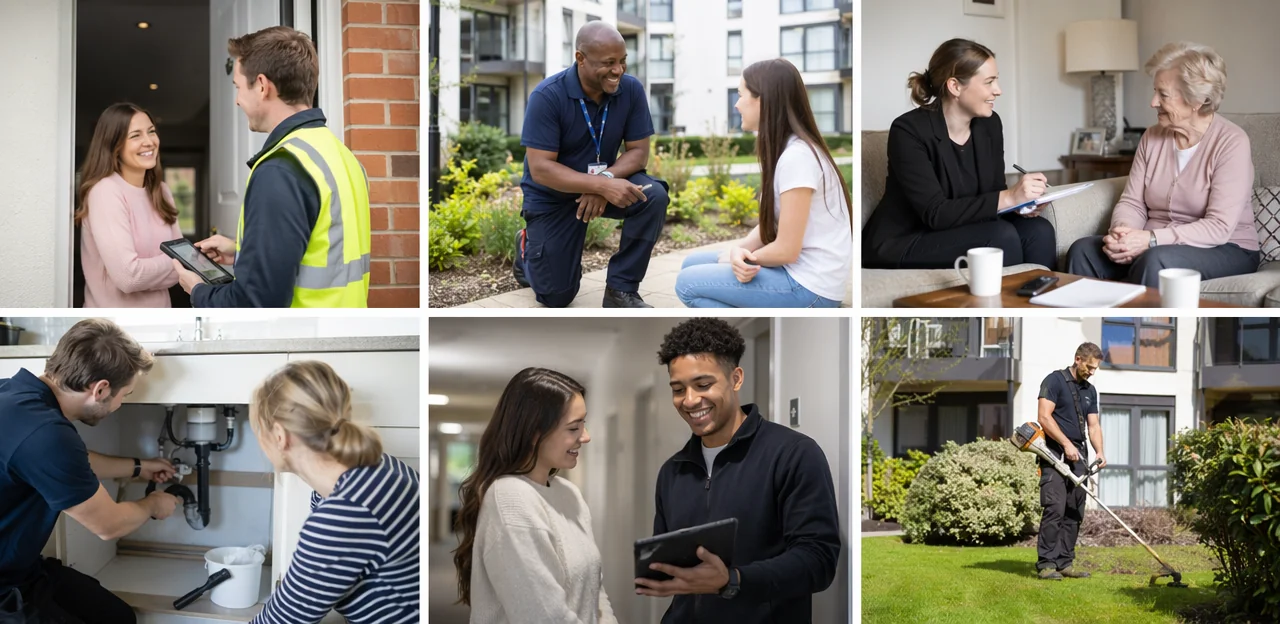
With NFC resident feedback, housing teams can make property maintenance feedback, cleanliness reporting, and safety issue reporting faster and easier in shared spaces. A simple tap in corridors, lifts, bin stores, laundries, or entrance halls lets residents report issues the moment they see them.
- Maintenance problems: broken lighting, damaged doors, faulty entry systems, or heating issues in communal areas
- Cleanliness concerns: spills, overflowing bins, unpleasant odors, or missed cleaning rounds
- Safety risks: slippery floors, blocked exits, exposed hazards, or anti-social behavior concerns
To improve response times, use short forms with location tags, photo upload, and priority options. Route urgent alerts directly to the right team so hazards are addressed quickly, residents feel heard, and shared spaces stay safer, cleaner, and more welcoming.
Guest and visitor experience in mixed-use or build-to-rent settings
In mixed-use developments and build-to-rent communities, NFC resident feedback can extend beyond residents to improve every guest-facing interaction. By placing tap points at reception desks, lobby entrances, lifts, parcel areas, and amenity spaces, operators can capture visitor feedback while the experience is still fresh.
- Use short tap-to-report flows for guests to rate welcome, wayfinding, cleanliness, and staff helpfulness.
- Track recurring themes in guest experience across concierge, security, and front-of-house teams.
- Add issue categories such as access problems, queue times, noise, or unclear signage for faster service recovery.
- Review build to rent feedback by location and time to spot peak-pressure moments and training needs.
Tools such as Tapsy can support no-app NFC touchpoints that make feedback quick, visible, and actionable.
Capturing client experience insights for housing operators
NFC resident feedback gives housing associations, landlords, and operators a simple way to collect property management feedback exactly where issues happen, from lifts and bin stores to laundries, entrances, and communal halls. Because responses are tied to a location, teams can spot recurring patterns faster and improve client experience across individual buildings and wider portfolios.
- Identify repeat pain points: Track frequent complaints about cleanliness, lighting, access, noise, or maintenance by area.
- Prioritise housing operations: Use real-time alerts and trend reports to direct staff and contractors to high-friction spaces first.
- Benchmark sites: Compare blocks, schemes, or regions to see where service standards slip or improve.
- Close the loop: Act on common issues, then measure whether satisfaction rises after changes.
Platforms such as Tapsy can help operators capture and route this feedback without adding friction for residents.
Implementation best practices for housing teams

Designing simple, high-conversion feedback forms
For NFC resident feedback, the best forms are the shortest ones residents can finish in seconds. Strong feedback form design improves completion rates and gives teams cleaner, more actionable data.
- Use clear issue categories: cleanliness, noise, maintenance, safety, access, or amenities. This improves routing and supports better resident survey UX.
- Prefill location automatically: when a resident taps in a hallway, laundry room, lift, or lobby, attach that location by default to reduce typing and reporting errors.
- Keep required fields minimal: issue category and a short rating or comment are usually enough.
- Make photos optional: image uploads can add context without creating friction.
- Show one screen first: avoid long, multi-step high-conversion forms unless absolutely necessary.
Platforms like Tapsy can support no-app NFC flows that keep reporting fast and intuitive.
Choosing locations, signage, and calls to action
For effective NFC resident feedback, place tags where issues happen and where residents naturally pause. Good NFC signage should be easy to spot, simple to understand, and quick to use.
- Choose high-visibility locations: entrances, lifts, laundry rooms, bin areas, hallways, parking areas, mailrooms, and shared kitchens or lounges.
- Place tags at eye level: avoid hidden corners, cluttered noticeboards, or surfaces blocked by doors and furniture.
- Use plain language: clear prompts improve response rates and support better housing communication.
- Add direct calls to action:
- Tap here to report an issue
- Tap to share feedback
- Tap to tell us about cleaning, repairs, or safety concerns
- Keep instructions short: mention that no app is needed and feedback takes seconds.
Solutions like Tapsy can help make these touchpoints fast and resident-friendly.
Privacy, accessibility, and operational integration
For NFC resident feedback to work at scale, housing providers need clear governance, inclusive design, and fast routing into daily operations.
- Protect housing data privacy: collect only the minimum personal data needed, explain why it is captured, and provide a clear consent notice at the tap point. For GDPR compliance, use role-based access, retention limits, and anonymised reporting where possible.
- Build accessible feedback systems: offer NFC alongside QR, short URLs, multilingual forms, screen-reader-friendly pages, high-contrast layouts, and simple language. Include alternatives for residents without smartphones, such as phone or desk reporting.
- Enable maintenance workflow integration: connect reports to helpdesk, CRM, CAFM, or maintenance platforms so issues are tagged by location, prioritised, assigned, and tracked to resolution. Tools such as Tapsy can help trigger real-time alerts and service recovery workflows.
Measuring success and optimizing service recovery

Core KPIs for NFC resident feedback programs
To make NFC resident feedback effective, track a focused set of metrics that show both operational speed and resident experience. Key resident feedback KPIs include:
- Report volume by location: identify hotspots such as lifts, hallways, bins, parking areas, or laundry rooms.
- Response time metrics: measure how quickly staff acknowledge a report after a resident taps.
- Resolution time: track the average time to fully fix each issue type.
- Repeat issue frequency: flag recurring problems that suggest poor root-cause resolution.
- Completion rate: monitor the percentage of reports closed successfully.
- Resident satisfaction after closure: use a short follow-up rating to confirm whether the fix met expectations.
Review these KPIs weekly to spot trends, prioritize maintenance, and improve service recovery.
Using feedback data to prioritize property improvements
NFC resident feedback becomes far more useful when teams look beyond single complaints and focus on patterns. With strong issue trend analysis, housing managers can spot repeated problems in specific buildings, floors, lobbies, lifts, laundry rooms, or bin areas and act before dissatisfaction spreads.
- Track issue frequency by location, category, and time period
- Identify high-cost recurring problems versus quick operational fixes
- Use housing analytics to match complaint trends with maintenance spend and staffing gaps
- Turn recurring reports into property improvement insights that support budget planning
This helps teams direct contractors, cleaning schedules, and capital investment where they will have the biggest resident impact.
Closing the loop with residents after an issue is reported
To close the feedback loop, speed matters as much as the fix itself. With NFC resident feedback, residents should never wonder whether their report was seen or ignored. Strong resident communication builds trust and improves service recovery in housing.
- Send an immediate acknowledgement: confirm the issue was received, include a reference number, and set expectations for next steps.
- Provide status updates: let residents know when the issue is assigned, in progress, delayed, or resolved.
- Follow up after resolution: ask if the problem was fully fixed and invite a quick satisfaction check.
Platforms such as Tapsy can help automate these touchpoints, making recovery faster, clearer, and more resident-centered.
Common challenges and future opportunities

Overcoming adoption barriers among residents and staff
Strong NFC resident feedback programs succeed when adoption is simple for both residents and teams. Common barriers include low awareness, inconsistent phone compatibility, limited staff training, and unclear internal ownership.
- Build awareness: Use clear signage in lifts, lobbies, laundry rooms, and other shared spaces explaining how to tap and report issues in seconds.
- Support compatibility: Pair NFC tags with QR codes so residents without NFC-enabled phones can still participate, improving NFC adoption.
- Train staff well: Give frontline teams simple workflows for triage, response times, and escalation.
- Assign ownership: Define who monitors alerts, closes issues, and reports outcomes to boost trust and resident engagement.
A no-app platform like Tapsy can help reduce friction and increase usage.
Combining NFC with QR, SMS, and omnichannel reporting
A strong NFC and QR strategy works best when residents are not limited to one reporting method. While NFC resident feedback makes tap-to-report fast in shared spaces, adding QR codes and SMS issue reporting improves access for older phones, low-battery situations, or residents who simply prefer texting.
- Use NFC tags in lifts, hallways, laundry rooms, and bin stores for instant issue reporting.
- Add QR codes beside each tag so residents can scan if tap is unavailable.
- Offer SMS issue reporting on signage for quick, no-app reporting from any mobile device.
- Connect all channels into one dashboard for true omnichannel feedback and faster service recovery.
Platforms like Tapsy can help unify these touchpoints into clear, actionable reporting.
The future of smart housing feedback and connected buildings
The future of resident feedback lies in turning every shared-space touchpoint into a live operational signal. With NFC resident feedback, housing teams can move beyond static surveys and build smart housing systems that respond faster and learn continuously.
- Connected touchpoints: NFC and QR points in lifts, lobbies, bin stores, laundry rooms, and entrances capture feedback exactly where issues happen.
- Automated routing: Reports can be sent instantly to cleaning, maintenance, concierge, or property managers based on issue type and location.
- AI-assisted triage: Smart prioritization helps flag urgent risks, group repeat complaints, and suggest next actions.
- Portfolio-wide insight: Across connected buildings, richer data reveals patterns in service quality, asset performance, and resident experience.
Platforms like Tapsy can support this no-app, real-time feedback model.
Conclusion
In shared housing environments, small issues can quickly become bigger frustrations when residents do not have an easy way to report them. That is why NFC resident feedback is becoming such a valuable tool for housing providers, property managers, and service teams. By letting residents simply tap their phone to report cleanliness concerns, maintenance problems, safety issues, or service gaps in real time, teams can capture feedback at the exact moment it matters most.
More importantly, NFC resident feedback supports faster service recovery, better communication, and a stronger resident experience across shared spaces like lobbies, lifts, laundry rooms, hallways, and communal amenities. Instead of waiting for complaints to build up, housing operators can identify patterns, prioritize urgent issues, and respond before dissatisfaction grows. The result is a more proactive property management approach and a more trusted living environment.
If you are looking to improve operations and resident satisfaction, now is the time to explore tap-to-report systems for your properties. Start by identifying high-traffic shared spaces, defining alert workflows, and choosing simple no-app touchpoints that residents will actually use. Solutions like Tapsy can help illustrate how NFC-enabled feedback can be deployed in physical spaces. Take the next step by reviewing your current feedback process and building a faster, smarter resident reporting journey.
Frequently Asked Questions
- What is NFC resident feedback in housing properties?
NFC resident feedback lets residents tap a phone on an NFC touchpoint in a shared space to report an issue immediately. It is designed for places like lobbies, elevators, laundry rooms, gyms, parking areas, and communal entrances. The goal is to make reporting fast, simple, and tied to the exact location.
- Why do shared-space issues often go unreported in residential buildings?
Traditional reporting can feel slow, unclear, or not worth the effort for communal problems. Residents may need to find the right email, phone number, or portal and manually enter details like location and issue type. That delay can allow safety, cleanliness, and maintenance problems to get worse.
- How does tap-to-report improve maintenance response times?
Tap-to-report removes common barriers such as app downloads, password resets, and contact lookups. Residents can submit an issue the moment they notice it, which gives teams clearer and more timely information. That helps staff triage urgent problems sooner and act before they escalate.
- What kinds of issues can residents report through NFC touchpoints?
Residents can report maintenance, cleanliness, safety, access, lighting, noise, and amenity-related issues. Examples include broken lights, faulty entry systems, spills, overflowing bins, odors, blocked exits, and damaged equipment. Short comments and optional photos can add context.
- Where should NFC tags be placed in a housing building?
Tags work best in high-traffic communal areas and near problem-prone spots. Suitable locations include entrances, lobbies, elevators, mailrooms, package areas, gyms, waste zones, hallways, parking areas, and laundry rooms. Placement should be at eye level with clear tap-to-report signage.
- What is the typical resident journey from tap to submitted report?
A resident taps the NFC touchpoint with their phone, which opens a mobile feedback form. They select an issue category, add brief details or a photo if needed, and submit the report. The issue is then sent immediately so the team can respond faster.
- Is NFC better than QR codes for housing feedback collection?
NFC is usually faster because it can work as a one-tap action, while QR requires opening a camera and scanning. QR is more widely accessible because it works on almost any smartphone camera, while NFC depends on device support and settings. A combined NFC and QR setup is often the most practical approach.
- How can NFC feedback support service recovery and tenant trust?
Instant reporting helps staff prioritize urgent issues while details are still accurate. Automated acknowledgements and status updates show residents that their feedback was received and assigned. When problems are visibly tracked and resolved, trust in the property team tends to grow.
- Can NFC feedback be used for guests and visitors as well as residents?
Yes, it can also support guest and visitor feedback in mixed-use developments and build-to-rent settings. Operators can place tap points at reception desks, lobby entrances, lifts, parcel areas, and amenity spaces. This helps capture feedback on welcome, wayfinding, cleanliness, staff helpfulness, and access issues.
- What makes a high-conversion NFC feedback form?
The most effective forms are short and easy to complete in seconds. Clear issue categories, automatic location prefills, and minimal required fields help reduce friction. Optional photo uploads can improve accuracy without making the process feel heavy.
- What should signage say near an NFC reporting point?
Signage should use plain language and a direct call to action. Examples include 'Tap here to report an issue,' 'Tap to share feedback,' or 'Tap to tell us about cleaning, repairs, or safety concerns.' It should also make clear that no app is needed and the process only takes seconds.
- What privacy and accessibility considerations matter for NFC resident feedback?
Housing teams should collect only the minimum personal data needed and explain why it is being captured. The setup should support role-based access, retention limits, and anonymised reporting where possible. Accessibility improves when NFC is paired with QR, short URLs, multilingual forms, screen-reader-friendly pages, simple language, and non-smartphone alternatives like phone or desk reporting.
- Which KPIs should housing teams track for an NFC feedback program?
Useful KPIs include report volume by location, response time, resolution time, repeat issue frequency, completion rate, and resident satisfaction after closure. These measures show both operational speed and resident experience. Reviewing them regularly helps teams spot hotspots and improve service recovery.
- How can feedback data guide property improvements and staffing decisions?
Location-based reports make it easier to identify recurring problems by building, floor, or shared area. Teams can compare issue frequency, category, and timing to find high-friction spaces and decide where contractors, cleaning schedules, or capital investment are needed most. This turns individual complaints into practical operational priorities.
- What common adoption barriers should teams plan for when launching NFC reporting?
Common barriers include low awareness, inconsistent phone compatibility, limited staff training, and unclear ownership of alerts and follow-up. Clear signage, QR backup options, simple internal workflows, and defined responsibility for monitoring and closing issues can reduce friction. Some teams may also benefit from adding SMS and other channels into one reporting setup.